How often each palm needs it
Sabal palm (cabbage palm, the state tree): about once a year, mainly to remove fully brown fronds and old boots. It's Florida's toughest, most hurricane-hardy palm — leave it full.
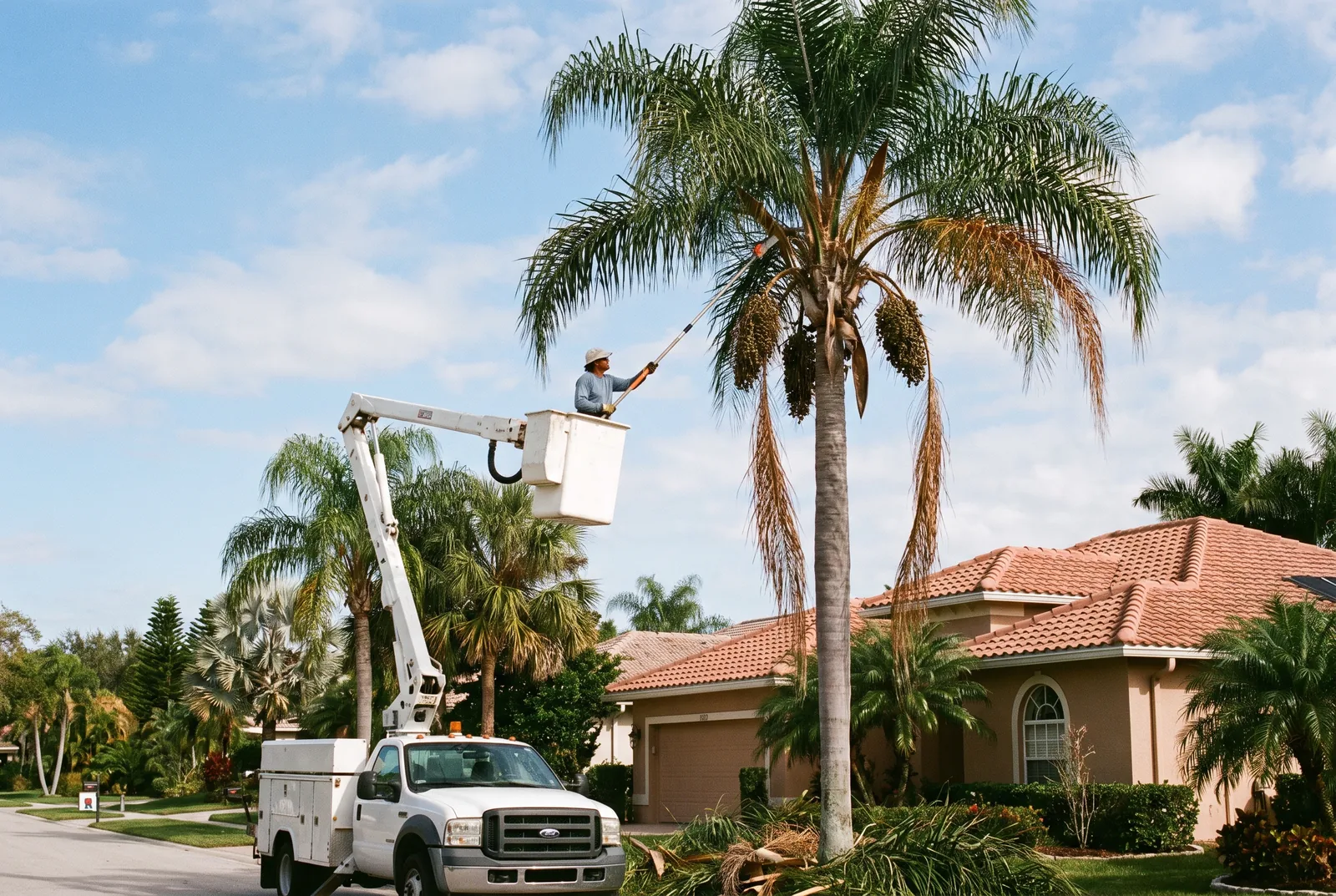
Queen palm: twice a year, mostly to drop the big flower and seed stalks before the heavy pods fall on their own, plus dead fronds. Watch for yellowing new growth (a potassium/magnesium deficiency common in our sandy soil), which is a fertilizer issue, not a pruning one.
Royal and coconut palm: once a year for dead fronds and, on coconuts, de-nutting over patios and walkways so nobody gets hit.
Washingtonia (Mexican fan palm): once a year; the tall ones need a bucket or climber. Old fronds form a "skirt" that some people like removed for a clean trunk.
Why the "hurricane cut" is the wrong move
The over-pruned look — a palm cut up to a narrow plume of five or six fronds — is everywhere on the Treasure Coast, and it hurts the palm. Green fronds feed the tree; cutting them off starves it, slows growth, invites nutrient deficiency and pest problems, and — contrary to the whole idea — does not make it safer in a storm. A palm with a full, balanced crown handles wind better than a stripped one. UF/IFAS is explicit: never remove green fronds that are above the horizontal (the "9-and-3" line). Take the brown, the yellowing-and-dying, the seed pods and the loose boots, and stop.
Disease and deficiency to watch for
Lethal bronzing (formerly Texas Phoenix palm decline) is present on the Treasure Coast and kills sabals, queens, Phoenix (date) palms and others. The signs: premature fruit drop, then the oldest fronds bronzing and dying upward, then the spear (newest) frond collapsing. It's fatal and can spread, so a suspected palm should be removed and disposed of, and tools sterilized between palms. Ganoderma butt rot shows as a conk (a shelf mushroom) at the base and is also fatal. Frizzle top — weak, frizzled new growth — is usually a manganese deficiency and is treatable with the right palm fertilizer. A good trimmer sterilizes between palms and tells you what they see rather than just cutting.
Doing it yourself vs. hiring
A short sabal you can reach from the ground is a DIY job with a clean, sharp saw. Anything that needs a ladder against the trunk is where people get hurt — palm work is one of the more dangerous yard tasks, and tall Washingtonias and royals need a bucket truck or a trained climber. If it's over a cage, a pool or a walkway, or you're not sure it's healthy, it's worth the call.
Common questions
How often should I trim my palms in Port St. Lucie?
Sabals once a year, queens twice (mainly for seed pods), royals and coconuts once a year, Washingtonias once a year. Trimming more often than the palm needs just stresses it. We'll set an honest schedule based on what you actually have.
Is the 'hurricane cut' good for storm season?
No — it's counterproductive. Over-pruning a palm to a narrow tuft starves and weakens it and does not make it safer in wind; a full crown handles storms better. UF/IFAS recommends leaving all green fronds above the horizontal. We take the dead fronds and the seed pods and leave the green.
My queen palm's new fronds are yellow and frizzy — is it dying?
Probably a nutrient deficiency (potassium or manganese), which is very common in our sandy soil, not a reason to cut. The fix is the right palm fertilizer, not pruning. If the newest spear is collapsing and older fronds are bronzing upward, that's more serious — possibly lethal bronzing — and we'd assess it.
Can you remove the coconuts so they don't fall?
Yes — we de-nut coconut palms over patios, driveways and walkways as part of the trim so you're not dodging falling coconuts all season.
Is it safe to trim my own tall palm?
A short sabal you can reach from the ground, yes. A tall Washingtonia or royal that needs a ladder or bucket is where injuries happen — that's worth hiring out, especially over a pool cage or walkway.
Related: Palm trimming · Palm removal · Storm prep · Contact us