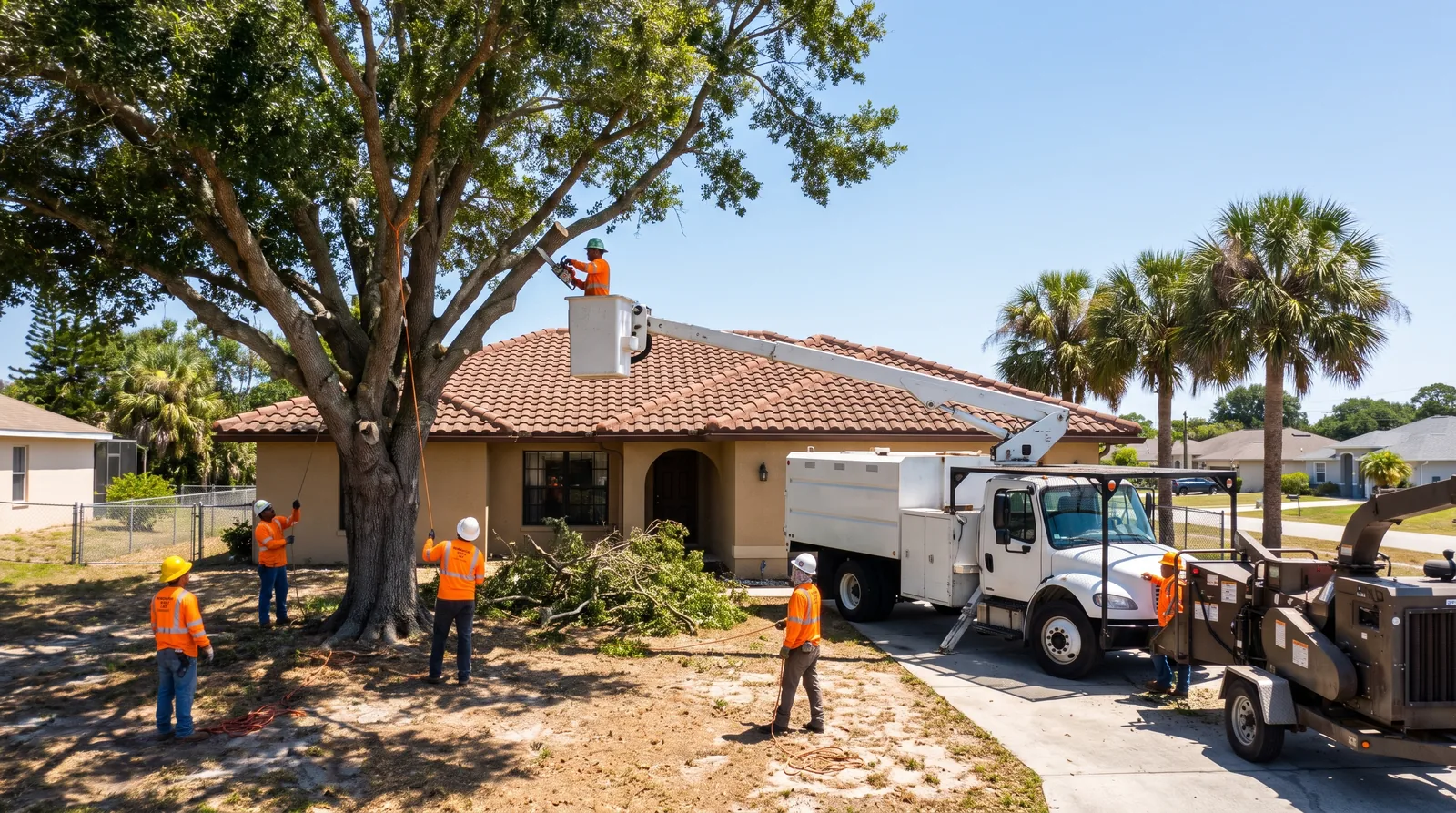
Treasure Coast tree work, done right the first time.
Tree removal, trimming, palm care, stump grinding and 24/7 storm cleanup across Port St. Lucie and the Treasure Coast — with an ISA Certified Arborist on staff, insurance you can actually see, and a crew that knows a laurel oak from a live oak and a canal lot from a dry one.
Free on-site quote
Same-day callback. Free on-site quote with a written price — no guessing over the phone.
A tree company built for St. Lucie County lots
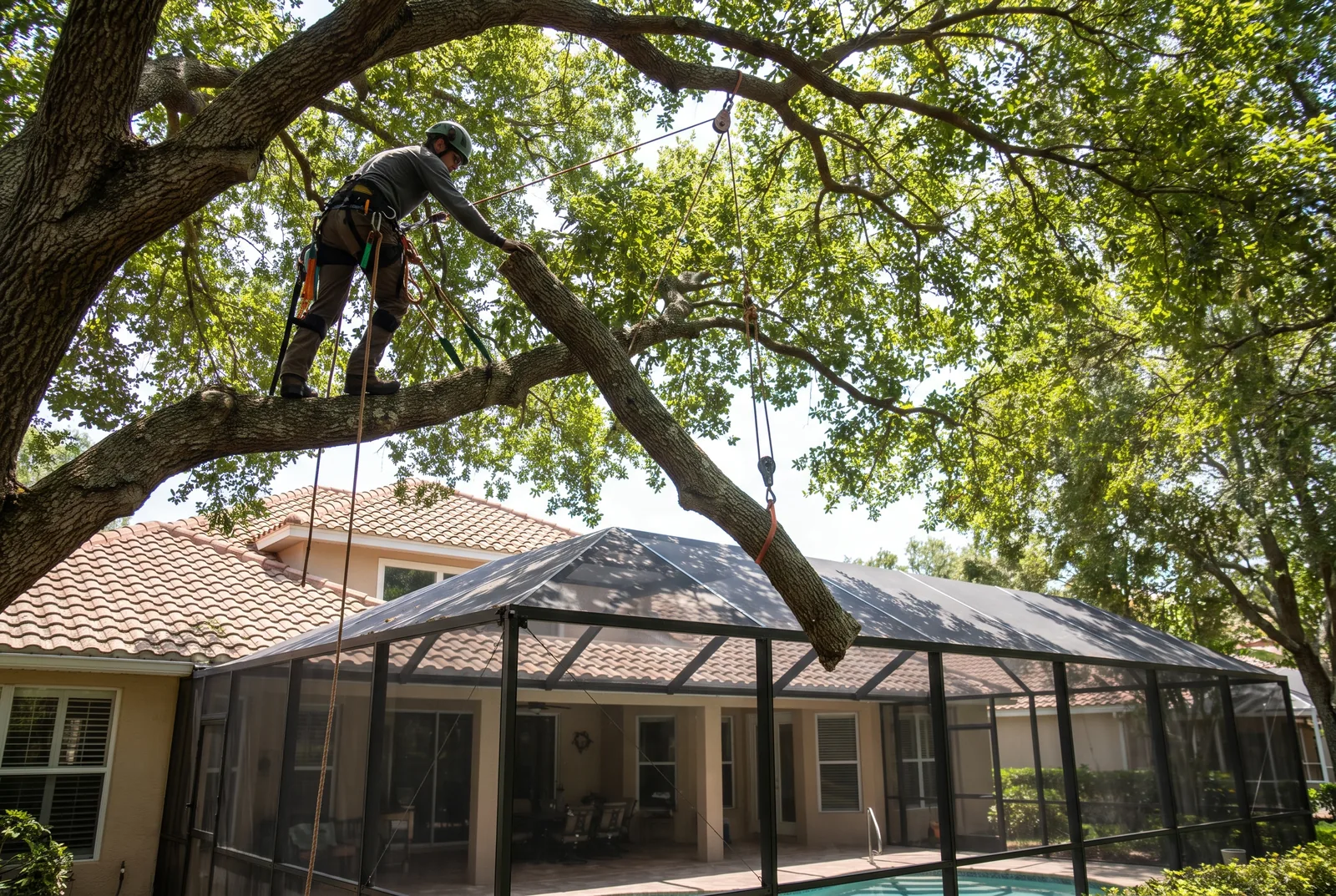
Tree removal
Dead, dying, leaning and in-the-way trees taken down safely — climbed and rigged piece by piece near the house, the pool cage and the seawall, craned when that's the smart way, dropped whole when there's room.
Removal & pricing →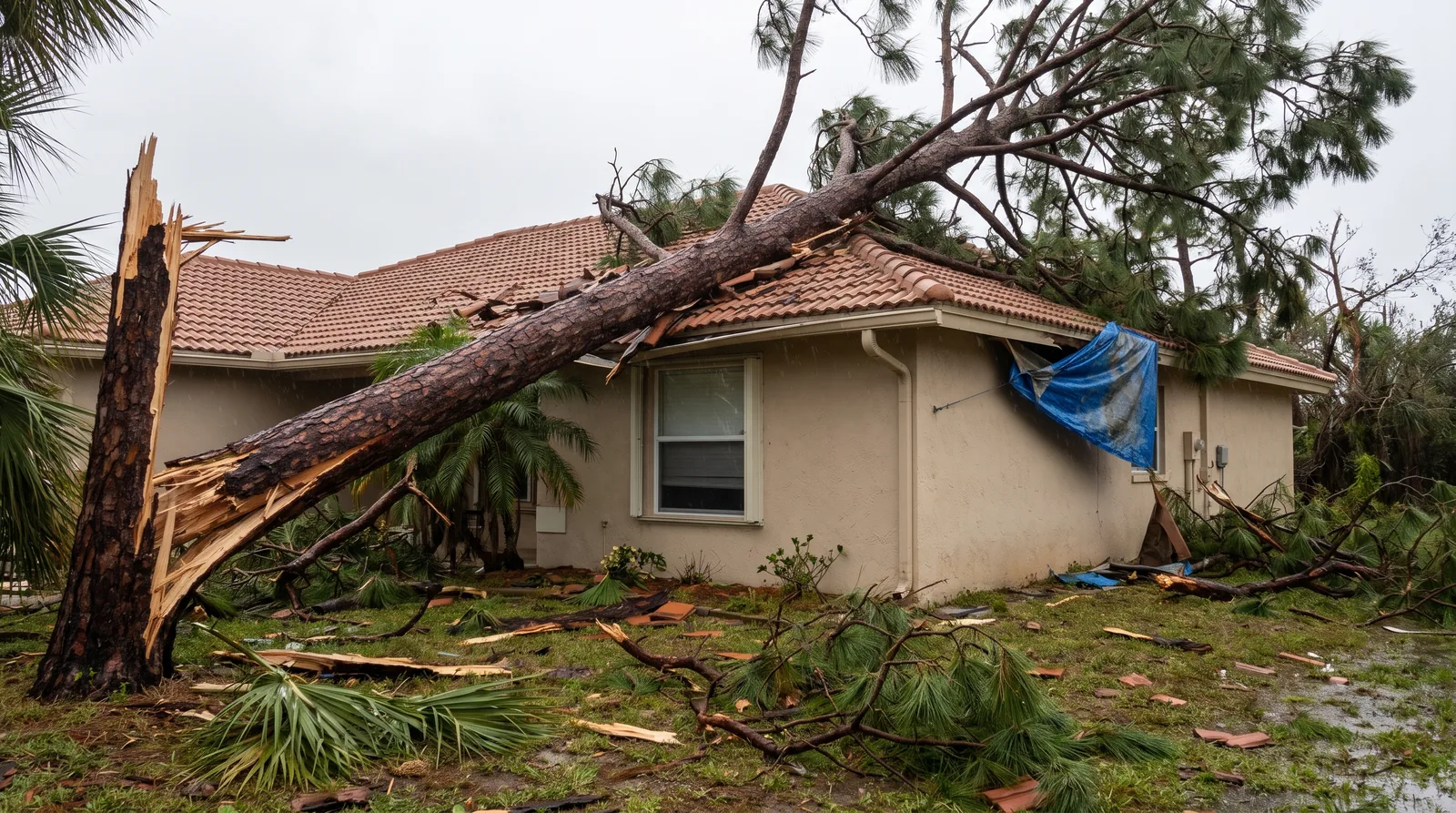
Emergency & storm service
Trees on roofs and lanais, hanging limbs, blocked driveways after a storm — answered any hour, with the photos and paperwork your insurer will want.
24/7 storm service →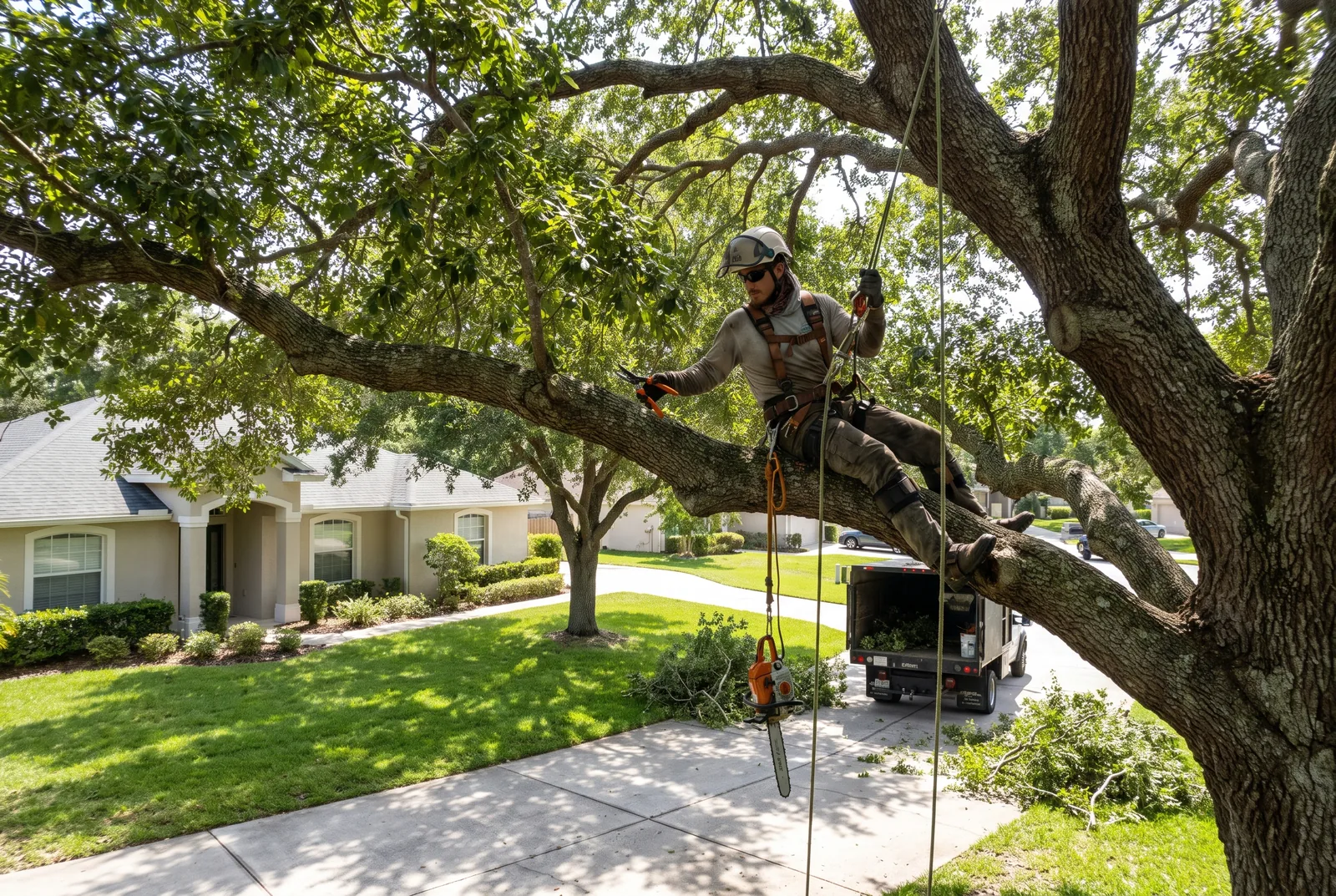
Tree trimming & pruning
Canopy lifting, deadwooding, structural pruning and clearance from roofs, wires and driveways — cuts made where the tree can seal them, never topped.
Trimming & pruning →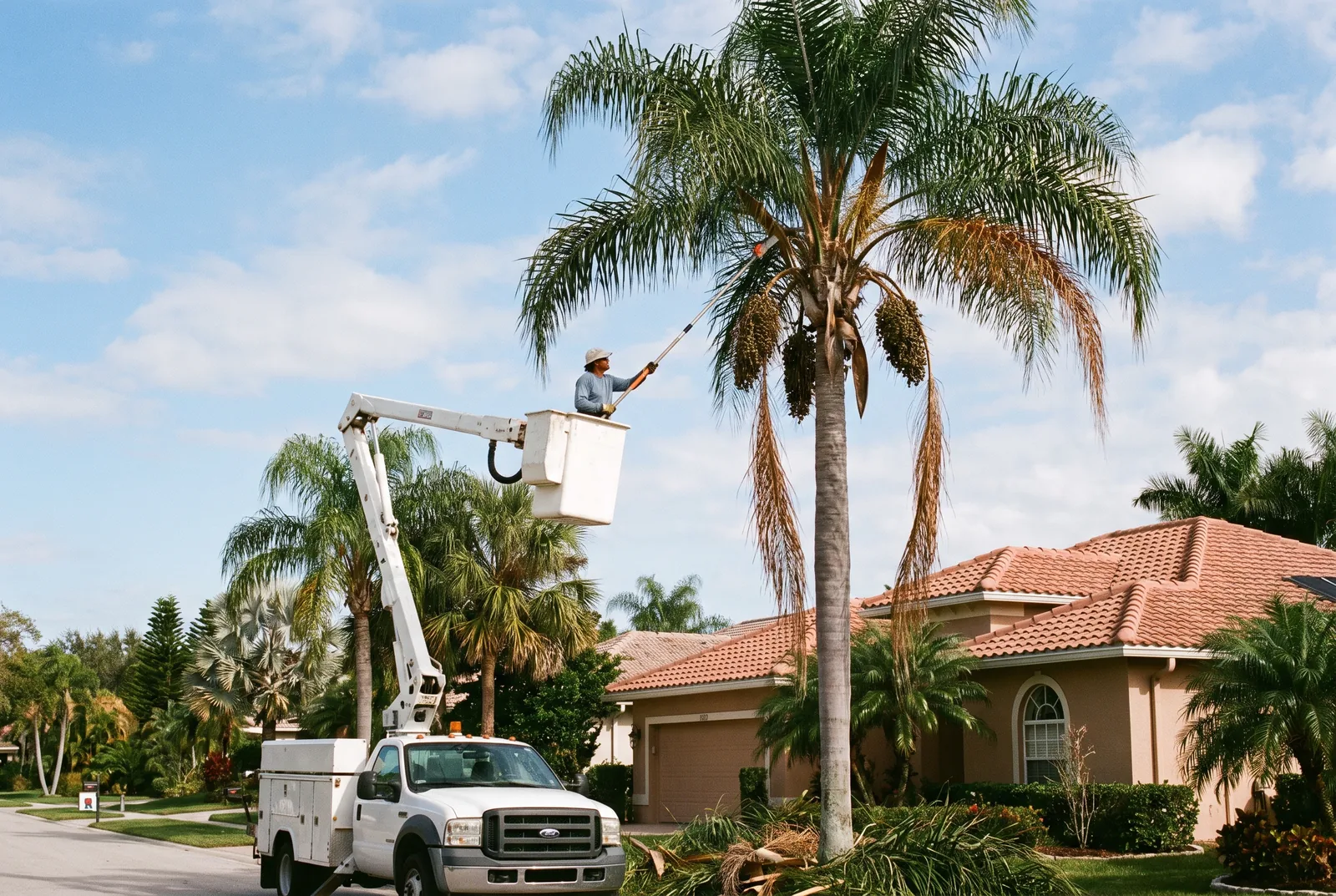
Palm trimming
Sabal, queen, royal, coconut and Washingtonia palms cleaned of dead fronds, seed pods and boots — to the University of Florida standard, not hurricane-cut.
Palm care →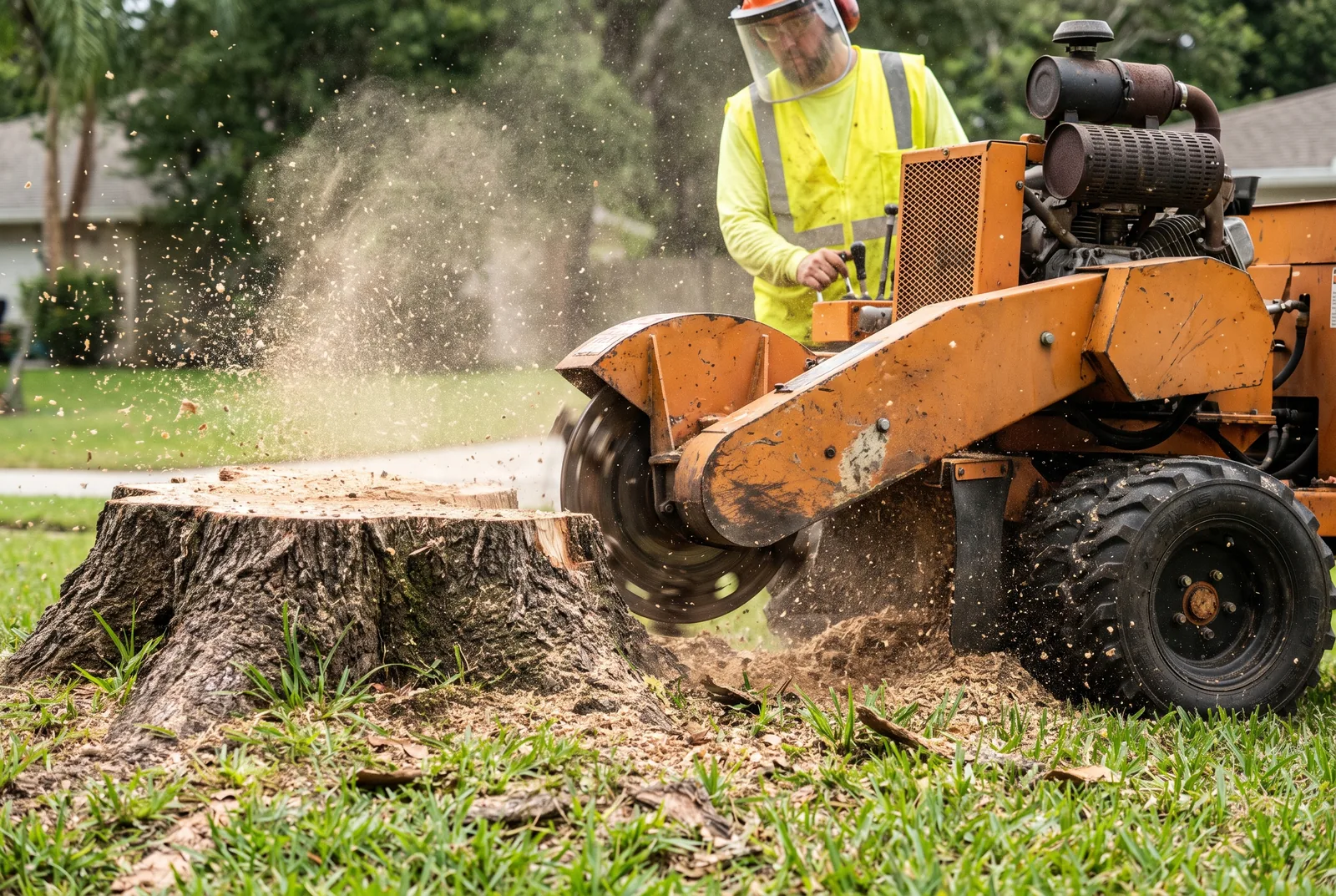
Stump grinding
Stumps ground 8–12 inches below grade, surface roots chased, chips raked and the hole backfilled so you can sod or plant over it.
Stump grinding →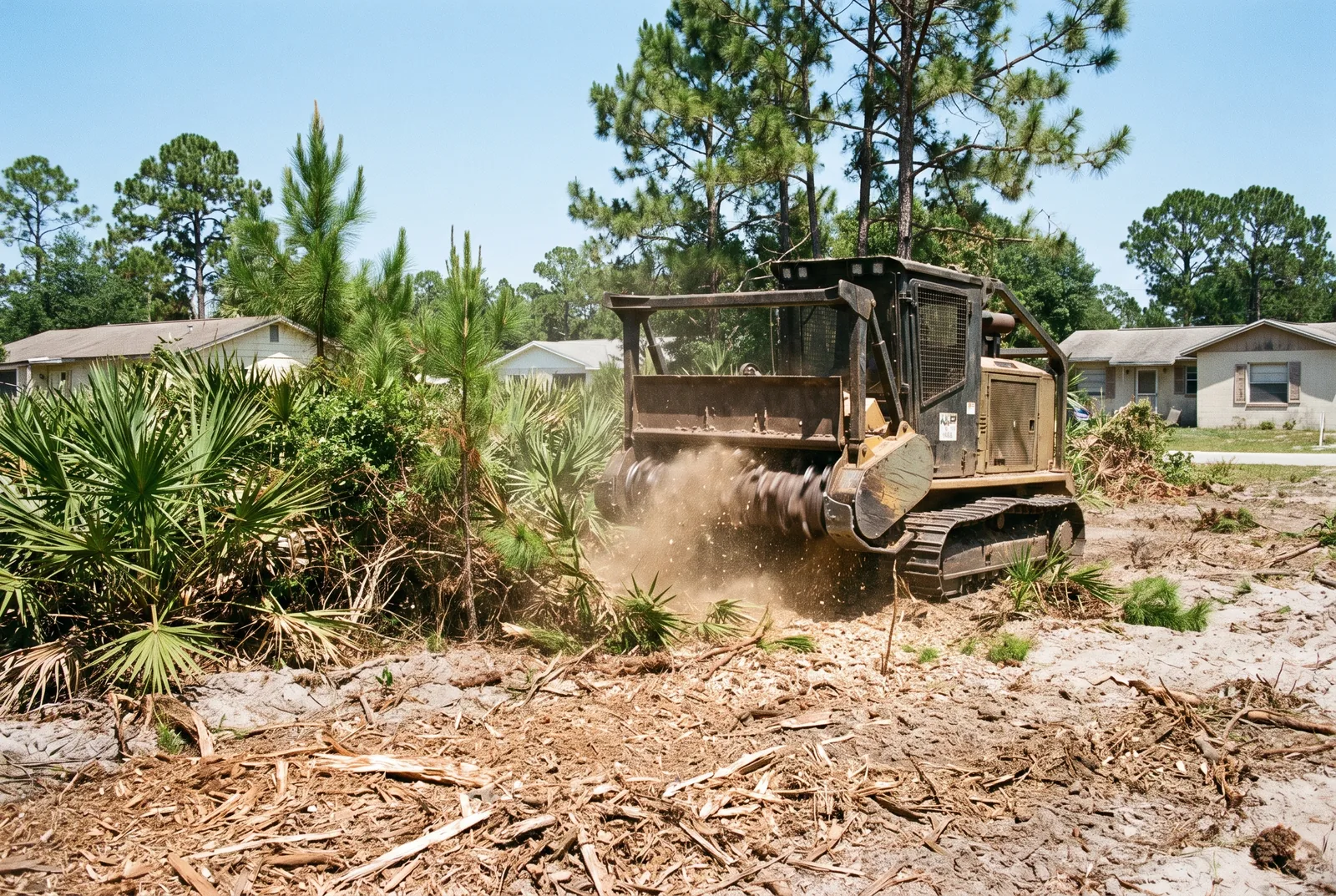
Lot & land clearing
Selective clearing for new builds, pools and additions — palmetto, pine and invasive Brazilian pepper mulched, with the permit paperwork handled.
Lot clearing →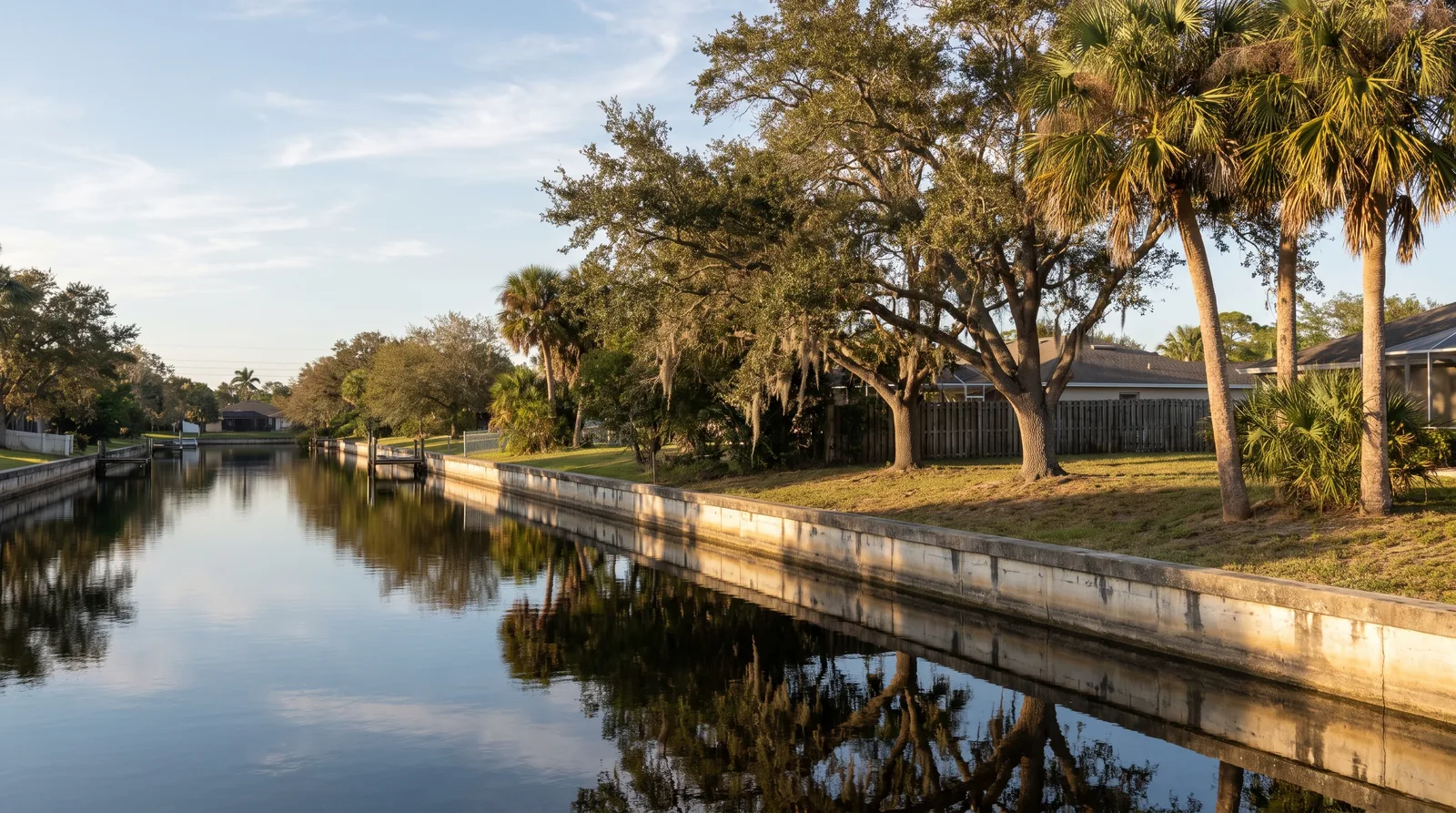
Port St. Lucie was laid out on a grid of canals — and planted all at once
When General Development Corporation platted Port St. Lucie starting in the early 1960s, it carved the city into tens of thousands of quarter-acre lots stitched together by roughly a thousand miles of freshwater canals. Those lots were cleared, built and landscaped in waves, mostly with fast-growing laurel oaks and slash pines — and five and six decades later, those same trees are reaching the end of their lives at the same time.
That's the St. Lucie County reality: sandy soil that doesn't anchor a tall pine, aging oaks along the older River Park, Sandpiper and Southbend sections, canal-bank trees leaning over seawalls, queen palms dropping heavy seed pods in the newer St. Lucie West and Tradition neighborhoods, and a hurricane season that has handed the Treasure Coast Frances and Jeanne in 2004, Matthew, Irma, Nicole and Milton since. So we inspect before we sell you anything, prune instead of top, trim palms instead of butchering them, and check the city code instead of hoping a violation notice never shows up.
And because we're here year-round, we're the crew that answers when the storm passes — not the out-of-town trucks that appear for two weeks and disappear.
Four steps, no surprises
Call or send the form
Tell us what's going on — a leaning tree, a palm that needs cleaning, a stump in the way, a lot to clear. We answer around the clock.
Free on-site look
We come out, look at the tree, the access and what's under it — house, pool cage, canal, power drop — and tell you plainly: prune it, take it down, or leave it alone.
Written price
An itemized price good for 30 days, with the removal, rigging or crane, hauling, stump and any permit spelled out. No guessing over the phone.
Done, chipped, raked
Most jobs finish in a day. Wood chipped, debris hauled, lawn raked, driveway blown off. Stump grinding scheduled if you want it.
From River Park to Tradition, and up to Fort Pierce
We're across Port St. Lucie every day: St. Lucie West, Tradition, Torino, The Cascades, PGA Village and Tesoro, Sandpiper Bay, River Park, Southbend, Ballantrae, Verano, Riverland, Rosser and the older sections east of I-95 near the river.
Beyond the city we cover Fort Pierce, White City, Lakewood Park, Jensen Beach, Stuart, Palm City, Hutchinson Island and, on request, Vero Beach and Okeechobee.
See the full service area →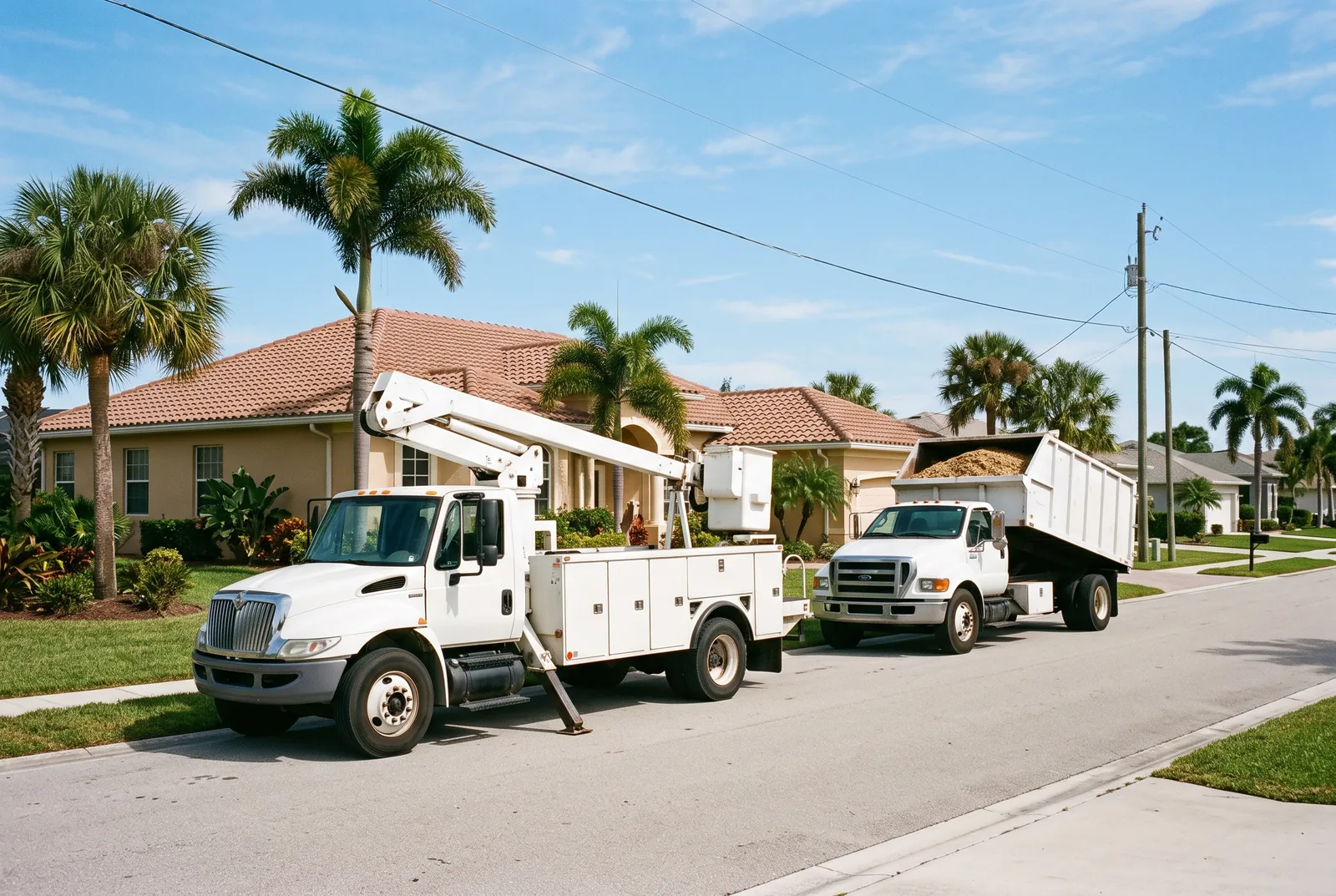
Questions Port St. Lucie homeowners ask us
Do I need a permit to remove a tree in Port St. Lucie?
For most homeowners, no. Port St. Lucie's landscape code (Chapter 154) protects trees 12 inches or more in trunk diameter and native palms with ten feet of clear trunk — but platted single-family lots are specifically exempt from the tree-preservation requirements, and non-native fruit trees like mango, avocado and citrus aren't counted at all. So the oak or pine in your own back yard usually comes down without a city permit. Vacant lots, commercial property, land-clearing and protected specimens are a different story, and that's where we pull the paperwork. When we're not sure, we check with Planning & Zoning before a saw touches the tree — not after.
How much does tree removal cost in Port St. Lucie?
Most removals land between $450 and $2,800. A queen palm or a 30-foot pine on an open lot is on the low end; a 60-foot laurel oak leaning over the house, a screen enclosure or a canal seawall — the kind that needs a crane or a climber rigging every piece down — is on the high end. Stump grinding is priced separately. You get a written price on site before anything is cut.
Why do people keep having trouble with laurel oaks and old pines here?
Because Port St. Lucie was platted and built in waves starting in the 1960s, and a lot of the fast-growing trees planted then — laurel oaks and slash pines especially — are hitting the end of their lives now. Laurel oaks hollow out at 40 to 60 years; slash pines snap or uproot in a hurricane because our sandy soil doesn't hold a tall trunk. Live oaks and sabal palms, by contrast, last for generations. If you have a big oak near the house and aren't sure which it is, that's what a free inspection is for.
Can you trim my palms the right way?
Yes — and the right way is not the 'hurricane cut' that leaves a pineapple of five fronds on top. Over-pruning a palm weakens it, invites disease and does not make it safer in a storm. We take the dead and dying fronds, the seed pods and the loose boots, and leave the green fronds above the horizontal, the way the University of Florida recommends. Sabal palms need it about once a year; queens twice, mostly to drop the heavy seed pods before they do.
Do you really answer at night during hurricane season?
24 hours a day, every day. The Treasure Coast took Frances and Jeanne three weeks apart in 2004, Irma in 2017 and Nicole in 2022 — when a pine comes through the lanai at 2 AM, the first hour matters. Call, tell us what's happened, and you'll get a callback with a plan and a time, not a voicemail box.