The general rule
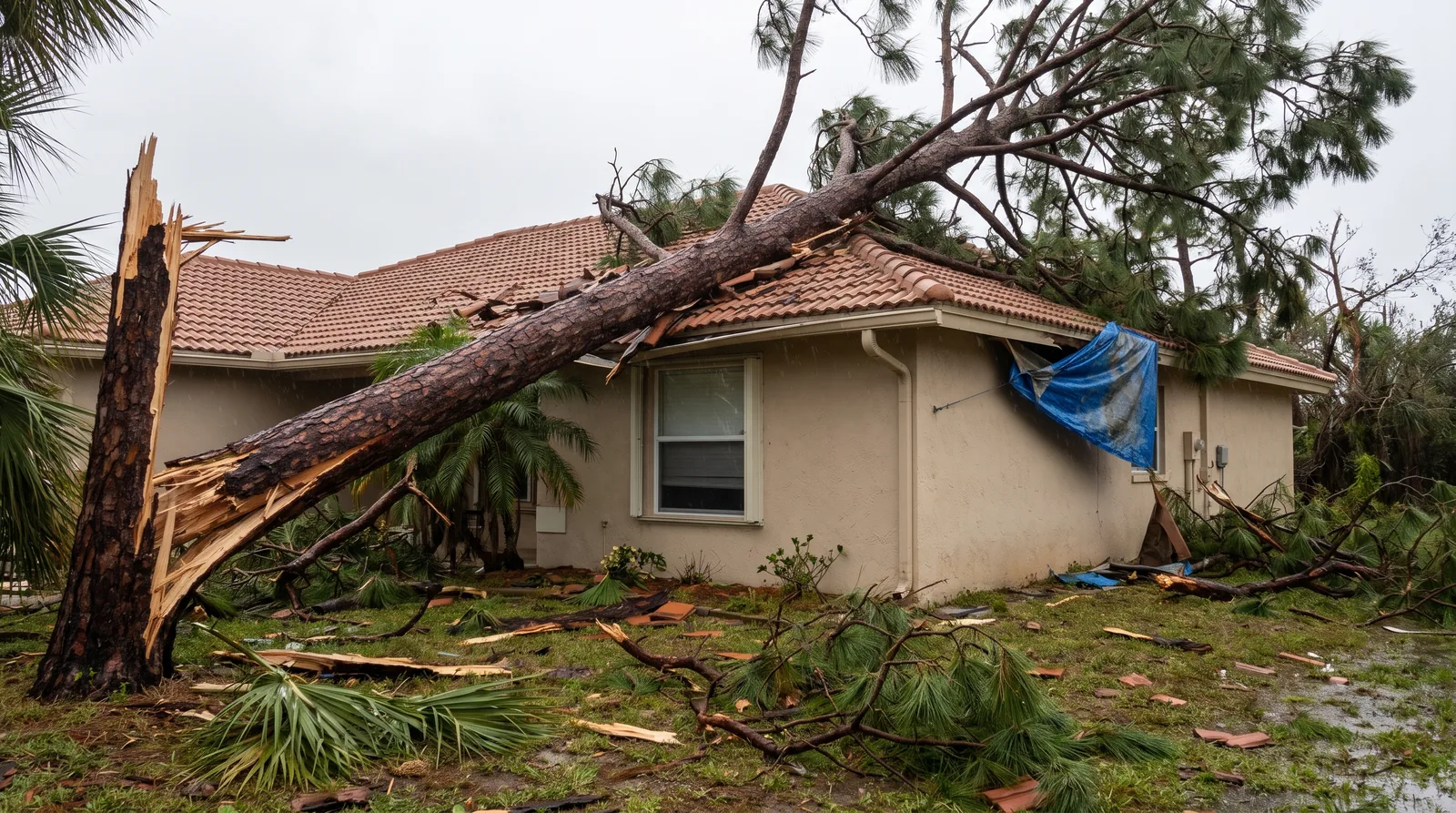
Florida homeowners policies generally cover tree removal only when a tree damages a covered structure — your house, a detached garage, a fence, a screen enclosure — and usually with a per-tree or per-event cap (commonly around $500 to $1,000 for the removal portion) and subject to your deductible, including a separate, larger hurricane deductible during a named storm. A healthy tree that simply blows down in your yard and hits nothing is typically not covered, and neither is preventive removal of a dying or hazardous tree before it falls. This varies by carrier and policy, so read yours or ask your agent — this is general information, not a coverage promise.
What's usually covered vs. not
| Situation | Usually covered? |
|---|---|
| Tree falls on your house, garage, fence or pool cage | Often yes (up to a cap, minus deductible) |
| Tree blocks your driveway or a handicap ramp | Sometimes (access provisions) |
| Healthy tree falls in the yard, hits nothing | Usually no |
| Preventive removal of a dying/leaning tree | No |
| Tree hits a neighbor's house from your yard | Their policy usually handles it |
| Removing the stump / the rest of the tree | Often not, beyond the cap |
The day a tree hits your house
- Safety first. Stay clear of anything on a power line and call FPL if a line is involved. Get everyone out from under a compromised roof.
- Document before anyone cuts. Photograph the tree, the damage and the point of failure from several angles. This is what the adjuster needs to see.
- Make it safe and prevent more damage. Policies expect you to prevent further damage — tarping an opened roof, for example. Keep receipts. We can tarp and stabilize the night it happens.
- Call your insurer and open the claim, and get a written, itemized estimate from a tree company (that's us) noting species, cause and scope.
- Let the work proceed once the adjuster clears it, or sooner for genuine safety — with everything documented.
The pitch to walk away from
If a "storm chaser" offers to waive or absorb your insurance deductible, or to handle the whole claim for you if you sign over your benefits, be careful. Insurance-deductible waiving is not something a straight contractor does in Florida, and broad assignment-of-benefits arrangements have burned a lot of homeowners on this coast. We document your damage properly, give you an honest itemized invoice, and talk to your adjuster — we don't play games with your deductible or your policy.
How we help
We provide the before-and-after photos, the species and cause, and the itemized invoice your adjuster wants, and we're glad to walk the damage with them. Homeowners who document well get paid faster. And we tell you plainly which parts of the job your policy is likely to cover and which it isn't, so there are no surprises.
Common questions
Will my insurance pay to remove a tree that's leaning but hasn't fallen?
Almost never. Preventive removal of a dying, leaning or hazardous tree is considered maintenance, not storm damage, and isn't covered — even though it's far cheaper than the claim after it falls. That's the case for handling it before hurricane season on your own dime.
A tree fell in my yard but didn't hit anything — covered?
Usually not. Most Florida policies only pay for removal when the tree damaged a covered structure. A tree down in the open yard is typically your cost, though some policies help if it blocks your driveway or a ramp. Check your specific policy.
How much will insurance actually pay for the removal?
When it's covered, there's usually a cap on the removal portion — often in the $500–$1,000 range per tree or per event — and your deductible (including a larger hurricane deductible during a named storm) comes off the top. The structural repair is separate. We itemize so you can see what falls inside and outside the coverage.
Should I wait for the adjuster before removing the tree?
For genuine safety — a tree on the roof, a blocked exit, a hazard over a walkway — make it safe and document first; policies expect you to prevent further damage. For non-urgent cleanup, photographing everything and coordinating with the adjuster first is smart. We can stabilize and tarp immediately and let the full removal follow.
Someone offered to waive my deductible — is that okay?
Treat it as a red flag. Waiving or absorbing an insurance deductible isn't something an honest Florida contractor does, and signing over your claim benefits to a storm chaser has cost a lot of homeowners here. We document your damage and bill honestly instead.
Related: Emergency service · Storm cleanup · Insurance & financing · Cost guide